“We’re Sluts.” Let’s Be Real About Open Love, Sacred Sex, and Unreasonable Happiness
Here’s the deal: most people hear “open relationship” and instantly picture a 24/7 orgy in a neon-lit mansion. That fantasy sells clicks, not truth.
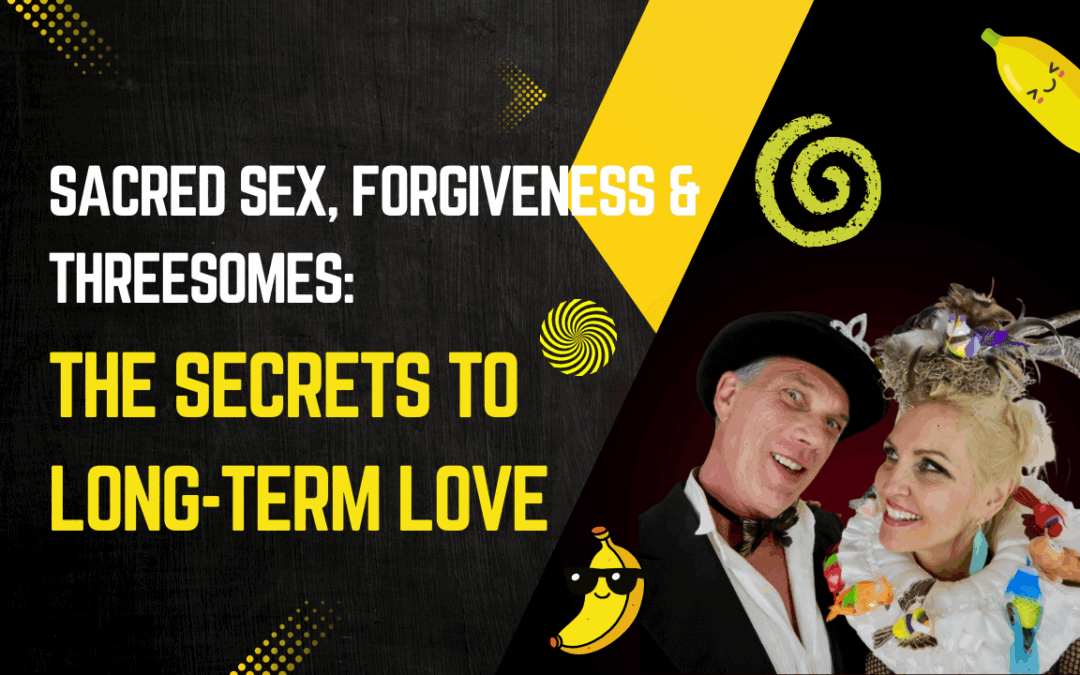
On Spicy Bananas, we sat down with Gregory and Candace Lowan—married 44 years, open for 25—to talk about what non-monogamy actually looks like when you strip away the myths and get honest about love, aging, and the spiritual side of sex. They’re lifestyle coaches, authors, and the founders of The Church of Unreasonable Happiness. Translation: they’ve done the work—on themselves, their marriage, and their community—and they’re still laughing, playing, and leveling up.
If you’re serious about connection, not drama, this will challenge your assumptions in the best way.
The Most Common Misconception: “We’re Sluts”
Let’s be real: people project. Gregory and Candace came out to family and friends after years of living their truth. Some folks pulled back—guilt by association is real. The assumption? That being open means being reckless.
Reality check: their lifestyle runs on ethics, boundaries, consent, and communication—not chaos. If anything, the “slut” label says more about cultural shame than about them.
The Origin Story (Yes, There’s a Hot Tub)
No, there wasn’t a big summit meeting with legal pads and org charts. Like a lot of couples who later explore ENM (ethical non-monogamy), curiosity and chemistry showed up in a familiar place: the hot tub. Comfort. Play. Openness. That environment made the first experiments feel natural, not transactional.
Truth: Most relationships don’t fail because of sex. They fail because people stop being honest with each other.
Boundaries, Fears, Desires: The Ritual That Actually Works
Before any “adventure,” they sit down with their partner(s) and trade three lists:
- Boundaries — the hard lines
- Fears — the anxieties that can sabotage the night
- Desires — what would make it genuinely meaningful
Two power rules:
- Consent must be sober. Agreements are made before any alcohol or plant medicine.
- Assume nothing. A “yes” last week can be a “not tonight” today. Check in, every time.
Let’s be real: if that feels like work to you, you’re not ready. The logistics are the easy part. The emotional maturity is the muscle.
Jealousy vs. Compersion (Read That Again)
They don’t pretend jealousy isn’t real; they’ve just built a better frame. It’s called compersion—joy in your partner’s joy. When Candace sees Gregory light up with someone else, she’s not “losing” anything; she’s witnessing a part of him she can’t (and doesn’t need to) be for him.
80/20 Rule of Long-Term Love: They each meet ~80% of the other’s needs. The last 20%? That’s where novelty, diversity, and personal edges live. Healthy ENM can meet that 20% without torching the 80%.
Pro tip: A quick glance across the room in the middle of everything—“I see you; we’re good”—does more for security than a thousand platitudes.
Porn Isn’t Education (And Everyone’s Been Learning From It)
If you grew up post-internet, your first sex teacher was probably a search bar. That’s a problem. Porn is performance—cuts, angles, chemistry hacks—not connection. People carry those scripts into bed and wonder why reality feels mechanical, painful, or disconnected.
Better curriculum: talk, slow down, and learn bodies—yours and theirs. The good stuff takes time. Foreplay isn’t a pre-game; it’s the game.
Sacred Sexuality: What It Actually Feels Like
Buzzwords aside, Gregory and Candace describe sacred sexuality as:
- Presence: being fully there, not chasing a highlight reel
- Reverence: treating bodies—and choices—as worthy of respect
- Energy: breath, touch, eye contact; letting the body lead instead of the brain script
Is it “woo”? Only if you define connection as woo. Most people are touch-starved and honesty-starved. Sacred sex solves for both.
Plant Medicine, Integration, and Energetic Intimacy
During lockdown, they leaned into breathwork, eye gazing, and energetic practice (think: extended arousal and whole-body waves, not performance Olympics). For them, plant medicine—used intentionally and integrated sober—opened doors to self-acceptance, spiritual inquiry, and deeper couple attunement.
Key point: the medicine isn’t the magic. Integration is. Morning rituals. Conversations. Naming what’s true. Choosing alignment over image.
Aging ≠ Over. It’s “Leveling Up.”
They banned the word “old” with a literal swear jar. At 66 and 65, they’re surrounded by younger friends not because they’re pretending to be 25, but because curiosity keeps you young. The body changes. Desire evolves. The play continues—because they keep choosing it.
Mantra: laugh often, move daily, flirt with life.
Threesomes: Why Fantasy Fails—and How to Make It Work
Most people romanticize the logistics and ignore the reality:
- Start with connection, not choreography. If you’re leading with positions, you’re already in the weeds.
- Name the “No’s” first. It creates safety and actually unlocks better “Yes.”
- Don’t force “sexy”. Sometimes the night becomes cuddle, conversation, or care. That’s still a win if you’re building trust, not chasing novelty.
Outcome you can bank on: the more expectations you carry in, the more chaos you create. Go in curious, not choreographed.
Trauma, Power, and Taking Back the Wheel
Candace shared a past assault she’d minimized for decades—until writing their first book surfaced the pattern behind her “I’m in charge” energy. Owning the story changed the way she shows up: not as a victim, not as a performance, but as a woman reclaiming authorship of her body and desires.
Read that again: reclamation, not rebellion.
The Church of Unreasonable Happiness
Sounds provocative. It is. But not because it’s edgy—because it’s practical.
Unreasonable happiness = choosing joy even when it isn’t the “reasonable” emotional response. Small choices, all day long. Brushing your teeth with gratitude. Pulling on socks with a smile. Saying “ooh la la” when your knees complain. It’s a muscle. You build it.
No dogma. No tithing. No sermons. Just a commitment: be true, be kind, be present, and let joy be a discipline—not an accident.
For Couples Feeling the Spark Fade
Let’s cut the fluff. Do this:
- Have the talk you’re avoiding. Use “I” language. No blame. Start with truth.
- Trade lists: Boundaries, Fears, Desires. In writing. Sober.
- Ask the Fantasy Question. “What fantasy do you have—even if it’s not with me?” Information reduces shame.
- Pick one micro-ritual daily. Ten minutes eye gazing. Or breathwork. Or massage with no outcome. Connection before complexity.
- Decide what “sacred” means to you. Not Instagram. You. Then act like it.
If you can’t do those five, don’t touch non-monogamy. You’re not dodging problems—you’re importing them.
What Most People Miss
- Security is created, not granted. Reassure during the moment, not after the fact.
- Consent has a timestamp. Re-verify. Every time.
- Novelty ≠ intimacy. The right “third” won’t fix the wrong foundation.
- Play is serious business. The couples who last treat joy like a practice.
Final Word
Most people want the thrill without the honesty. Gregory and Candace flipped that: radical honesty first, thrill as a by-product. That’s why they’re still together, still laughing, still turning heads—for the right reasons.
If your relationship is stuck between boredom and fear, you’ve got two options: keep performing, or get real. Start with the conversation you don’t want to have. Then trade the lists. Then choose one tiny daily ritual that makes connection inevitable.
Unreasonable happiness isn’t a mood. It’s a strategy. And it works.
🎧 Listen to the full episode now:
👉Sacred Sex, Forgiveness & Threesomes: The Secrets to Long-Term Love
– Episode 28